August 24, 2026 | By Anita Shah
Baku is a city that likes to make an entrance.
There are the Flame Towers lighting up the night, the grand boulevards running along the Caspian and the beautifully preserved lanes of Icherisheher. It is a city where futuristic architecture and centuries-old stone walls somehow coexist without seeming out of place.
But one evening, we found a very different Baku.
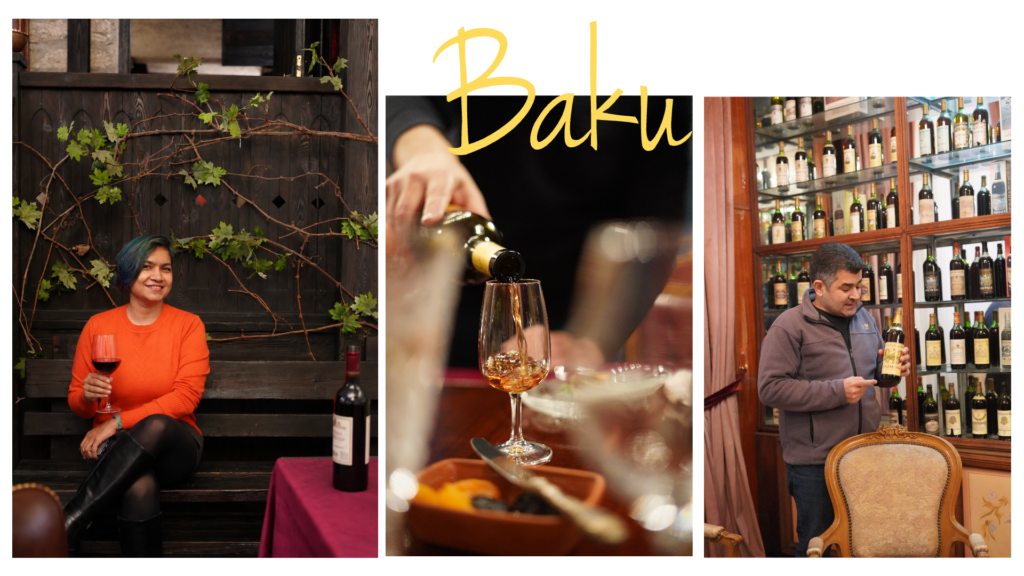
We were heading out for a wine experience, part of the Baku programme curated for us by OA GLOBE DMC, expecting an evening of tasting, conversation and perhaps a little history. What I wasn’t expecting was to feel as though we had stepped through a hidden door in the city.
The Baku Beyond the Postcard
It started with the entrance. Tall wooden structures stood on either side of a narrow alley, illuminated by warm, dim lights. The timber, the shadows and the quietness created an atmosphere that felt almost theatrical. Except this wasn’t a set.
We were actually walking into an old part of Baku. With every step, the modern city seemed to recede. The Flame Towers, the glass and steel, the polished avenues—all of it felt suddenly very far away. Ahead was an old building, equally atmospheric, with the kind of worn character that no new hotel or themed attraction can quite reproduce. For a moment, I forgot we were going to a museum or for wine tasting.
It felt more like entering a time passage. And then we stepped inside.
When Bottles Become Time Capsules
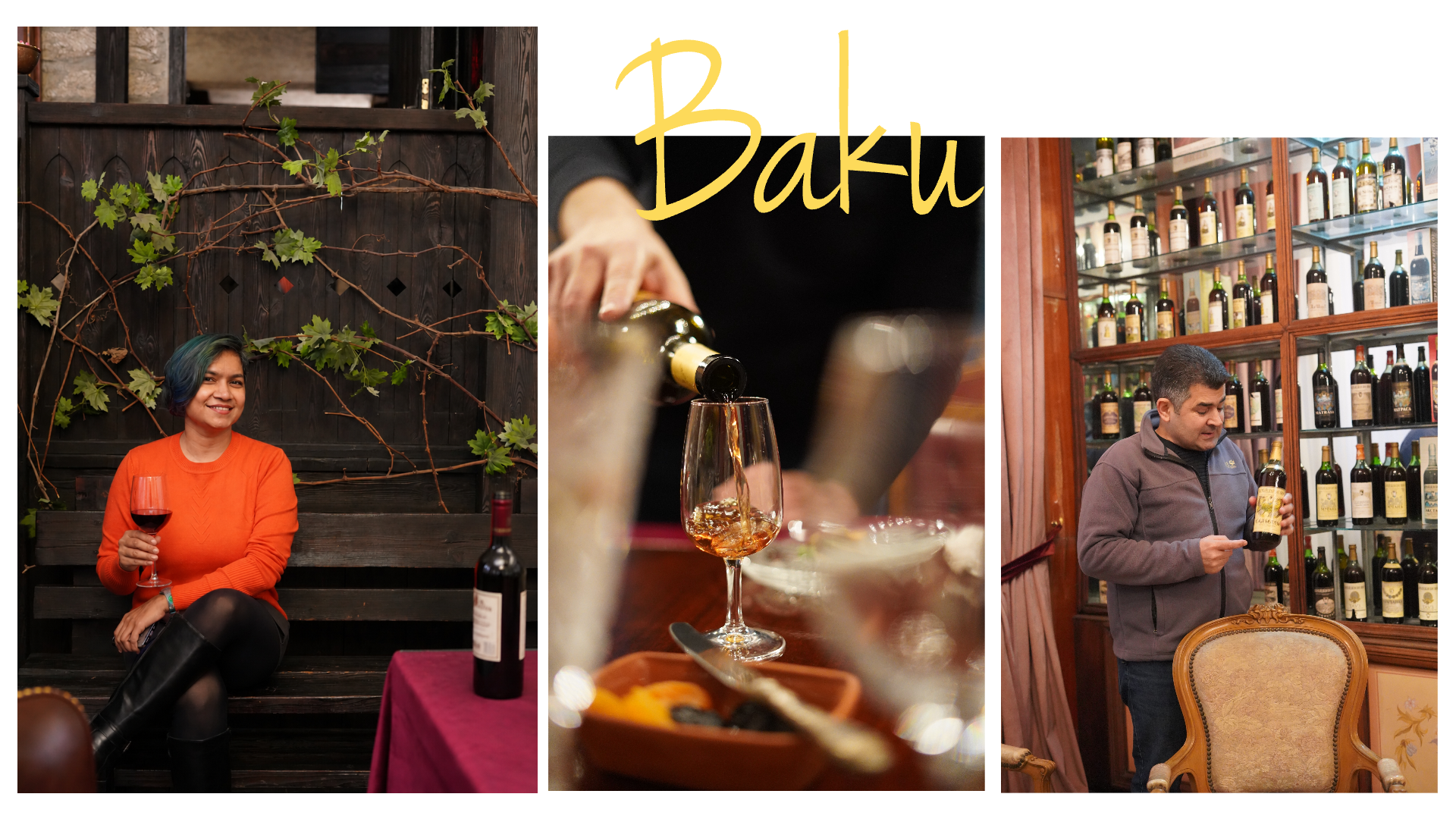
The first things that caught our attention were the bottles. Old bottles. Historic labels. Soviet-era wines. Different shapes, colours and designs, each one carrying its own little clue to the Azerbaijan that once was.
Our host began telling us about them, and that was when the experience changed. You stop seeing a bottle as a bottle. You start wondering who made it, when it was produced, who drank it and what was happening in the country at the time. Some of these bottles have lived through extraordinary changes in Azerbaijan’s history.
They survived political upheaval, changing governments, the Soviet period and the dramatic transformation of the country’s wine industry. Suddenly, the collection felt less like an exhibition and more like an archive.
History, preserved in glass. And it turns out Azerbaijan has quite a story to tell.
Azerbaijan’s wine story is much older than you think
Before this evening, if someone had asked me to name the countries synonymous with ancient wine traditions in this part of the world, Azerbaijan probably wouldn’t have been my first answer.
That needs correcting. Archaeological evidence suggests that wine has been produced in Azerbaijan for thousands of years. Wine vessels and grape-related discoveries point to viticulture dating back well before the modern Azerbaijani state existed. The country’s wine story also took a fascinating turn in the 19th century, when German settlers arrived in Azerbaijan. They established communities, vineyards and wineries, bringing European winemaking techniques with them. One of the most important settlements was Helenendorf, today’s Göygöl.
It is a detail that makes the country’s wine history particularly fascinating. Because Azerbaijan’s wine story isn’t simply Azerbaijani. It has absorbed influences from Persian, Caucasian, Russian and German cultures, while retaining grape varieties that are distinctly local. That multicultural history is one of the reasons the wine collection becomes so interesting once you know what you are looking at.
Then came the Soviet years
And this is where the story takes a darker turn.
During the Soviet period, Azerbaijan became an important wine-producing region. Vineyards spread and wine production expanded considerably. Then, in the 1980s, came Mikhail Gorbachev’s anti-alcohol campaign. Across the Soviet Union, vineyards were destroyed on a massive scale. Azerbaijan was hit particularly hard. The industry that had taken generations to build was dramatically reduced, and many vineyards disappeared.
So those old bottles suddenly acquire another meaning. They are not just old. They are survivors of a lost wine industry.
Standing in that museum, surrounded by bottles from another era, you begin to understand why Azerbaijan’s contemporary wine revival is more than simply another country’s attempt to enter the global wine conversation. It is, in many ways, a rebuilding of something that had almost disappeared.
Forget Cabernet for a minute
Our tasting eventually moved from history to the rather more enjoyable business of actually drinking the stuff.
And this is where I would tell Indian travel designers: don’t go to Azerbaijan and order only the grapes you already know. Ask for the local ones.
Start with Bayan Shira, one of Azerbaijan’s indigenous white grapes. Then try Madrasa, the country’s best-known indigenous red variety. The idea is not to compare them with your favourite French or Italian wines.
That rather defeats the purpose. You are in Azerbaijan. Taste Azerbaijan. And then comes the one that gets everyone’s attention. Pomegranate wine.
Yes, pomegranate. If there is one bottle I would put in front of an Indian traveller purely to get the conversation going, this would probably be it. Pomegranate is enormously important to Azerbaijani culture. The country even celebrates the fruit with an annual festival in Goychay, one of its major pomegranate-growing regions. Turning it into wine is another matter altogether.
The result is unlike conventional grape wine—fruit-driven, sweet-tart and distinctly different from what most people expect when they hear the word “wine”. It is also wonderfully Azerbaijani. And that, ultimately, is what makes it worth trying.
The host makes the difference
But the wine itself wasn’t the only reason the evening worked. It was the person telling us the story. Our host didn’t turn the tasting into a lecture about acidity, tannins and wine terminology. Instead, the history came through conversations, anecdotes and stories around the bottles.
We tasted multiple wines. We asked questions. We compared notes. There was a brilliant spread of food which combined well with different types of wines.
And slowly the evening became less about “doing a wine tasting” and more about spending time somewhere that felt genuinely connected to the destination.
This is an important distinction when designing holidays.
A traveller doesn’t necessarily remember a 90-minute “wine appreciation session”.
They remember an evening when they walked down a dimly lit wooden alley, entered an old building, discovered bottles from another century, listened to stories about Soviet Azerbaijan and then tasted a wine made from pomegranates.
That’s an experience.
And this is where the DMC matters
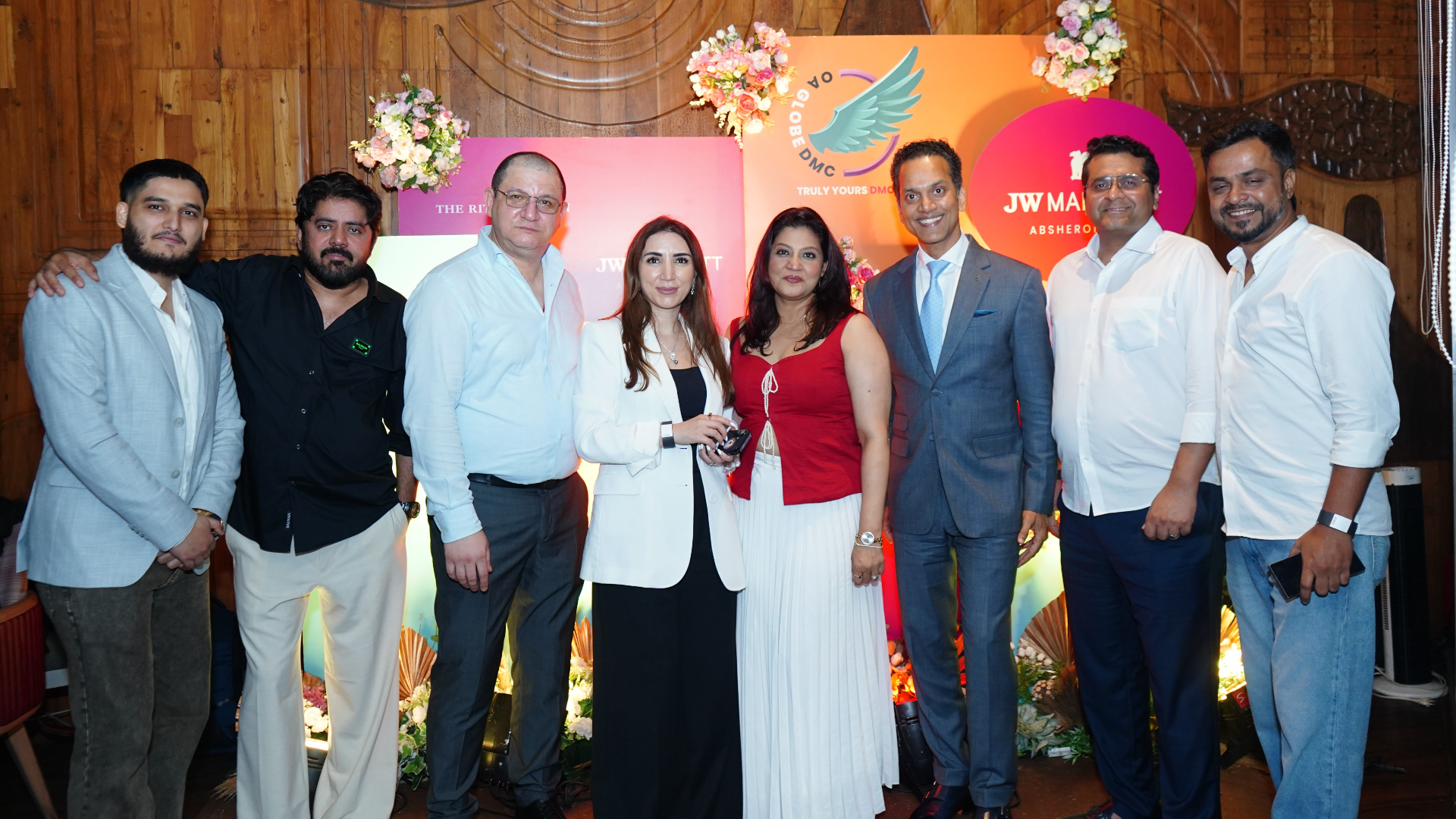
We discovered the experience through OA GLOBE DMC, and this is exactly the kind of inclusion that reminds me why the role of a good destination management company matters.
Baku already has enough obvious attractions to fill an itinerary. The Old City. The Flame Towers. The Caspian waterfront. Gobustan. Mud volcanoes. Absheron. Shahdag. The problem isn’t finding things to show a traveller. The challenge is finding things that make them feel something about the destination.
OA GLOBE DMC took us beyond the predictable sightseeing circuit and into this very different side of Baku. For Indian travel designers, I would particularly consider this for couples, small groups, friends travelling together and MICE programmes. Not as a “museum visit”.
That sounds far too ordinary. Sell it as an evening wine and heritage experience. That small change in positioning makes a big difference.
When to put it into the itinerary
I wouldn’t send a traveller here at 10 in the morning. You would lose half the magic. The experience works beautifully in the evening. After a day exploring Baku, return to the hotel, freshen up and head out as the city begins to glow. Then enter that wooden passage. Let the lights get dimmer. Let the modern city disappear. Walk into the old building. And let the host begin the story. Taste the Azerbaijani whites. Try Madrasa.
And, inevitably, someone will point at the pomegranate wine and say: “We’re definitely trying that.” They will. And then you’ll have dinner afterwards, still discussing which wine you liked.
The Baku I didn’t expect
Travel often works best when it surprises you.
I went into the Wine Museum expecting bottles. I came away thinking about time.
About how a city can preserve its history not only in palaces, mosques and monuments, but also in something as ordinary as a wine bottle. About how an old label can tell you about a political era. How a grape variety can tell you about a landscape. How a German settlement can become part of an Azerbaijani wine story.
And how a pomegranate—something so familiar to an Indian traveller—can suddenly become a completely different experience when poured into a wine glass in Baku.
Most visitors will leave Baku with photographs of the Flame Towers. We did too. But somewhere between the warm lights, the wooden alley, the old walls, the historic bottles and that surprisingly intriguing glass of pomegranate wine, I found another image of Baku. Older. Quieter. More intimate. And perhaps more memorable.
Because sometimes the best way to discover a destination isn’t to look up at its skyline. Sometimes, you just have to follow a dimly lit wooden passage and see what is waiting at the other end.
The Wine Museum experience was part of our Baku programme curated by OA GLOBE DMC.