August 25, 2026 | By Anita Shah
If you’re selling a European river cruise to an Indian traveller, there is one mistake worth avoiding: don’t sell Budapest as the place where the cruise starts. Sell it as the place where the holiday starts.
For someone who has never done a river cruise, the concept is already new. Unlike an ocean cruise, where the ship can be the destination, a river cruise is really about getting deep into Europe — sailing into the heart of cities, waking up somewhere new and, importantly, not having to pack and unpack every morning.
And Budapest is one of the best cities to demonstrate exactly why.
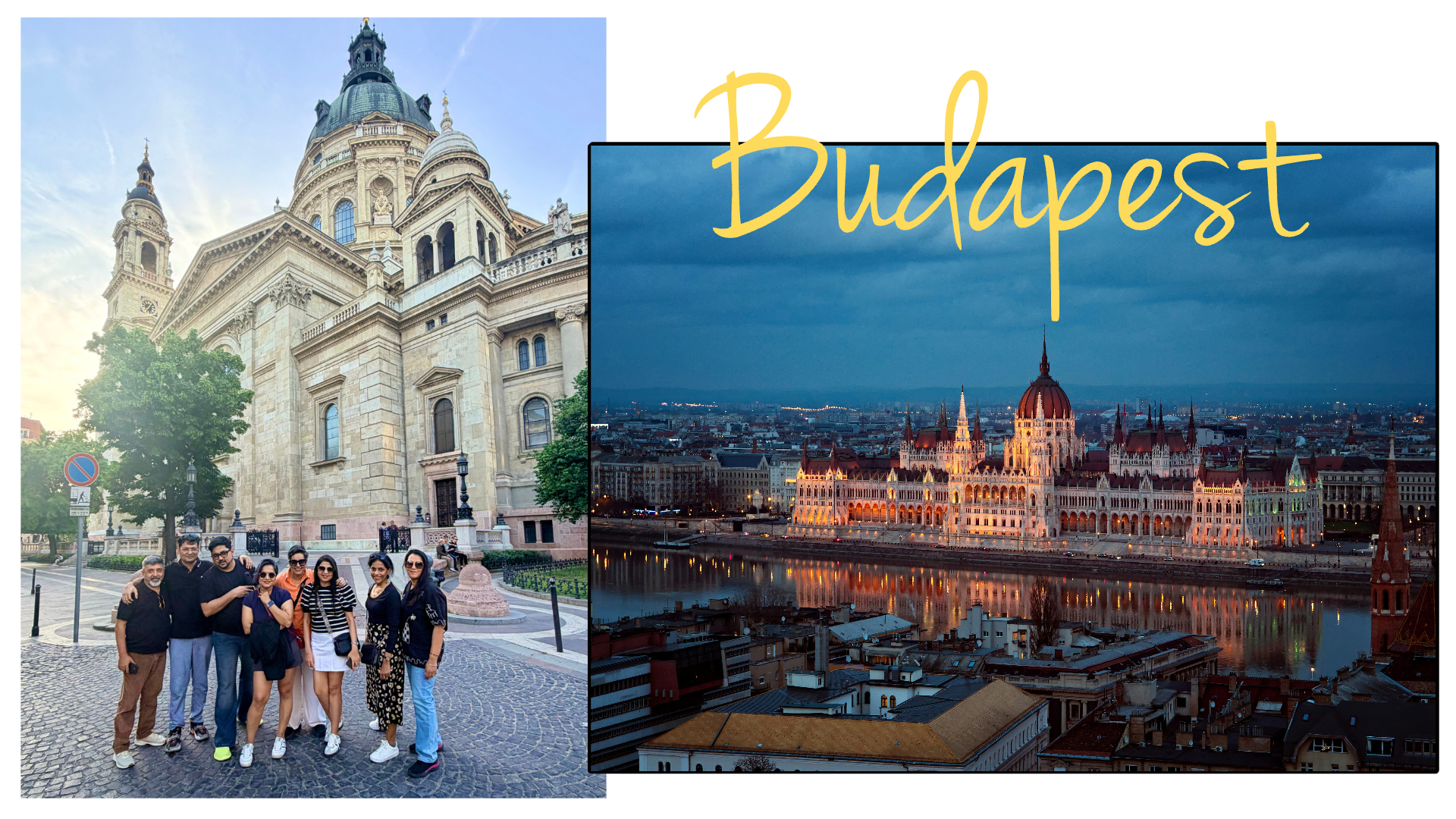
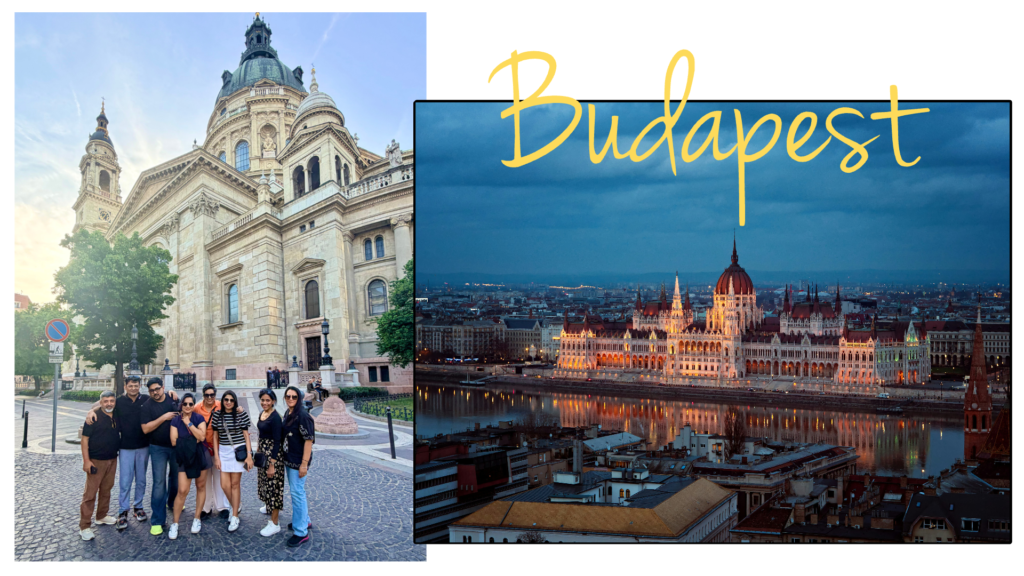
The Danube divides Budapest into Buda and Pest, while some of Europe’s most recognisable sights sit along or above the river — Parliament, Buda Castle, Fisherman’s Bastion and the Chain Bridge. VIVA Cruises itself describes Budapest as the “Queen of the Danube” and includes everything from classic city sightseeing to more unusual experiences such as a vintage Trabant tour.
But here’s our advice for Indian travel designers:
Do not give Budapest one rushed pre-cruise night. Give it two full days if the itinerary allows.
Because there is plenty to do — and some of the best experiences are not necessarily the ones you’ll find on page one of a conventional sightseeing brochure.
DAY 1: DO BUDAPEST LIKE A FIRST-TIMER — BUT NOT LIKE EVERY OTHER FIRST-TIMER
Arrive early enough to actually enjoy the city.
For Indian travellers flying into Budapest, the airport-to-city transfer is relatively straightforward. The official 100E Airport Express operates around the clock between Budapest Airport and the city centre, connecting with central stops including Kálvin tér, Astoria and Deák Ferenc tér.
For a premium cruise customer, however, particularly a family or small group with luggage, a pre-arranged private transfer is often the more comfortable option.
The golden rule? Don’t schedule anything heroic on arrival day. Long-haul flight from India + immigration + luggage + jet lag + European walking tour is not a recipe for happy clients. Check in, freshen up and then start with the Budapest classics.
Start with Pest
Begin on the Pest side, where the city feels more open, urban and energetic.
Walk around the Parliament area and the Danube promenade. The Hungarian Parliament Building is the obvious showstopper, but don’t make the mistake of simply photographing it and leaving. Walk towards the river. Cross the Chain Bridge. Look back.
This is one of those cities where the view is half the attraction. Then head towards St Stephen’s Basilica and Andrássy Avenue. VIVA’s own Budapest sightseeing programme combines St Stephen’s Basilica, Heroes’ Square, Andrássy Avenue and the Buda side, which gives travel designers a good framework for a first-time city orientation.
Then go up to Buda
Cross the river and change the mood completely. Buda is where you want to take clients for the classic postcard Budapest experience — Buda Castle, Castle Hill and Fisherman’s Bastion.
And yes, Fisherman’s Bastion is touristy. Do it anyway. There is a reason everyone photographs it.
The views across the Danube towards Parliament are spectacular, particularly around golden hour. This is also where Indian travellers who love photography will happily spend considerably more time than the itinerary initially suggests. That is a good thing.
A river cruise holiday should never feel like a military operation.
Give them coffee. Give them cake.
Budapest has a serious café culture, and this is a good opportunity to introduce Indian travellers to the city through food rather than another monument. Look for traditional Hungarian cakes and pastries, coffee houses and local specialities.
And yes, Hungarian food is not exactly Indian food. That does not mean clients should spend seven days looking for dal.
This is the time to encourage them to try local cuisine — goulash, schnitzel, lángos, chimney cake and Hungarian wines — while making sure vegetarian and Jain-friendly requirements are discussed with restaurants in advance. For Indian groups, this is where a good DMC can make a huge difference.
DAY 1 EVENING: NOW STOP BEING TOURISTS
This is where Budapest gets interesting. The city after dark is a completely different proposition.
For younger couples, millennials and friend groups, consider Budapest’s famous ruin-bar culture. For families or more premium clients, choose a good dinner followed by an evening walk along the Danube. And if your clients are the kind who would rather do something memorable than sit politely in a hotel bar, Budapest has options.
Beer Bus
Yes, there is such a thing.
A Beer Bus experience is exactly the sort of quirky activity that works beautifully for friend groups, bachelor/bachelorette groups, younger corporate travellers and travellers who have already ticked off the major monuments. It turns sightseeing into a moving social experience.
It is not necessarily something you would put into a traditional luxury FIT itinerary. But for the right Indian traveller? Absolutely.
The lesson for travel designers is simple: Budapest doesn’t have to be sold only as “history + architecture + museums.” It can be fun.
DAY 2: GO BEYOND THE POSTCARD
This is where I would deliberately move away from the standard Budapest checklist. Because if you have two full days, you can afford to do something slightly unexpected.
Option 1: Margaret Island
Margaret Island is one of Budapest’s best ways to slow down.
Located in the Danube between Buda and Pest, the island is roughly 2.8 kilometres long and almost 100 hectares in area. It has gardens, historic ruins, a Japanese garden, a water tower, recreational spaces and a famous musical fountain.
It is particularly good for families, couples and travellers who have had enough of churches and castles. Rent a bike or pedal vehicle. Walk. Have coffee. Explore the gardens.See the ruins of the Dominican convent. And if travelling in the warmer months, consider Palatinus Bath, the thermal and open-air bath on the island.
For an Indian traveller, Margaret Island is also a useful reminder that Budapest isn’t simply a sightseeing city. It has a live-like-a-local side.
Option 2: The Trabant Tour — Budapest’s Delightfully Weird Side
This one deserves special attention.
Imagine exploring Budapest in a Trabant — the little East German car that became one of the most recognisable symbols of life behind the Iron Curtain. Yes, you can actually do this.
VIVA Cruises lists a “Vintage Car Exploration – Castle District” experience using Trabants, taking guests around the Castle District and to the Garden of Philosophy. The experience lasts around two hours, with English orientation from the driver; an expert guide can also be requested.
And this is precisely the kind of experience travel designers should have in their Budapest toolbox. Not because every client needs it. But because some clients absolutely will. It is quirky, photogenic, historical and completely different from another coach tour.
And frankly, telling someone they are going sightseeing in a vintage Trabant sounds considerably more interesting than: “Today you will visit the Castle District.” Same city. Completely different sell.
Option 3: Madame Tussauds Budapest
Yes, Madame Tussauds. No, we haven’t suddenly forgotten this is Europe.
Budapest’s Madame Tussauds works particularly well for families and multi-generational Indian groups because it gives younger travellers something immediately familiar alongside all the history. The attraction is centrally located on Dorottya Street, close to Deák Ferenc Square, making it relatively easy to combine with a central Budapest walking programme.
And because it is an indoor attraction, it can be a useful option when the weather decides to behave badly.
Travel-design tip: don’t build an entire day around it. Combine it with central Pest — Basilica, Danube promenade, shopping and cafés.
Option 4: Thermal Baths — But Do It Properly
Budapest is famous for its thermal baths, and this is one experience Indian travellers should understand before they arrive.
The city’s thermal-bath culture is not simply “go swimming.” It is part of Budapest’s identity. For first-timers, Széchenyi is the obvious name. It is spectacular, historic and visually impressive. But remember the customer. Some Indian families may be completely comfortable with public bathing facilities. Others may not. Some will love the experience. Others will ask, very reasonably, “Do we really have to sit in a pool with strangers?” No.
That is why travel designers should sell the experience, not force it. Explain what it is, what to expect, what to carry and how the facilities work. For the right traveller, it becomes one of the most memorable Budapest moments.
Option 5: Memento Park — For Clients Who Want a Story
This is one of my favourite alternatives for a more curious traveller.
Memento Park is a museum of Communist-era statues and monuments, created after the political transformation of Hungary. It includes the Statue Park, Barrack Cinema, photo exhibition and other displays explaining the period.
This is not your conventional “pretty Budapest” experience. And that is precisely why it is interesting. For history buffs, photographers, academics, repeat European travellers and corporate groups, it adds context to the city. It answers a question many tourists don’t think to ask:
What happened to all those Communist monuments after Communism ended? Budapest has an answer. They were moved here. That makes Memento Park more than a photo stop. It becomes a story.
DON’T FORGET THE CLASSICS
For a two-day itinerary, the temptation is to cram in everything. Resist it. The following should still form the backbone of a first-time Budapest programme:
Parliament Building
Chain Bridge
Buda Castle
Fisherman’s Bastion
St Stephen’s Basilica
Heroes’ Square
Andrássy Avenue
Danube Promenade
Great Market Hall
Central Budapest shopping and café areas
The trick is not to visit all of them separately. Cluster them geographically. That saves time, reduces transport and — most importantly — prevents the holiday from becoming: “Bus. Photo. Bus. Photo. Bus. Lunch. Bus. Monument. Bus.” Nobody needs that.
FOOD: WHAT SHOULD INDIAN TRAVELLERS KNOW?
Hungary is a meat-heavy destination, so vegetarian travellers need a little more planning than they might expect.
Goulash is the obvious Hungarian dish, but it is worth checking exactly what is being served because recipes vary. Lángos is another fun introduction — essentially a deep-fried dough base that can come with different toppings. Then there is chimney cake, or kürtőskalács.
For Indian travellers, it is the kind of street-food moment that needs no explanation: It looks good. It smells good. You will probably photograph it before eating it.
For vegetarian, Jain and other dietary requirements, advise clients to communicate requirements clearly rather than simply saying “vegetarian.” And for group tours, share a meal plan with the DMC in advance. The earlier you solve food, the less time you spend solving food during the holiday.
SHOPPING: DON’T MAKE IT AN AFTERTHOUGHT
Budapest is not Paris or Milan, and you shouldn’t sell it as a fashion-shopping destination. Instead, look at local products.
Paprika. Hungarian wines. Traditional sweets. Craft products. Local souvenirs. And, for clients who love markets, the Great Market Hall can be incorporated into a central city programme. Again, don’t give it three hours. Give it a purpose.
“Come here to understand what Hungarians eat, buy a few edible souvenirs and move on.” That’s better travel design.
THE BIG INDIAN TRAVELLER TIP: DON’T OVERPACK THE DAY
This is perhaps the most important point.
Indian travellers are often used to European holidays where ten cities appear in eight days. River cruising is different. The beauty is in slowing down. If your client has two pre-cruise days in Budapest, don’t create a 14-hour sightseeing schedule simply because you can. Give them breathing room.
A good Budapest day could look like:
Morning: Buda Castle + Fisherman’s Bastion
Lunch: Hungarian/local cuisine
Afternoon: Margaret Island OR Madame Tussauds OR shopping
Evening: Danube promenade + dinner
Night: ruin bar / Beer Bus / relaxed evening
That is a holiday. Not an endurance test.
DAY 3: NOW LET THE RIVER TAKE OVER
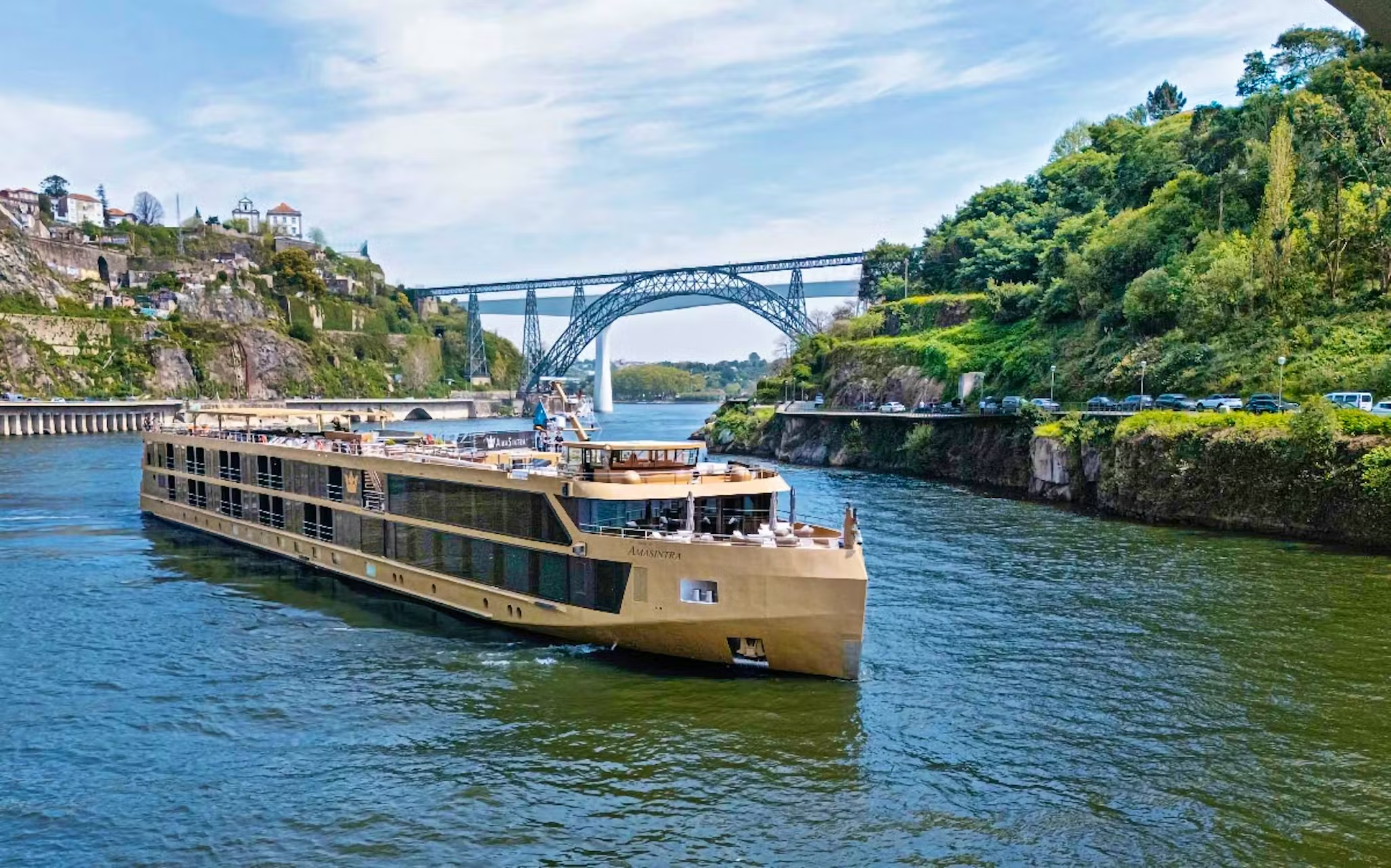
And then comes the transition. This is where river cruising starts making sense. After two nights in Budapest, the traveller checks into the ship. And suddenly, the suitcase stays where it is. That is one of the biggest selling points for first-time river cruisers.
You unpack once. The hotel moves.
Depending on the specific VIVA itinerary, Budapest may be the embarkation point or may appear later in the sailing, and the arrival/departure timings vary. For example, VIVA’s 2026 Danube Metropolis itinerary has Budapest from 22:00 on Day 3 until 18:00 on Day 4, while the Budapest & Danube in Perfect Harmony itinerary starts in Budapest at 18:00 on Day 1.
So the travel designer’s job is to read the exact sailing before selling the pre-cruise stay. If the ship stays overnight, use that. If it sails the same evening, make sure clients arrive with enough buffer. And if Budapest appears as a port later in the itinerary, don’t unnecessarily duplicate the same sightseeing programme.
HOW I WOULD SELL THIS TO AN INDIAN CLIENT
Don’t say: “Your cruise departs from Budapest.”
Say: “Let’s give you two days in Budapest before you board.”
That one sentence changes the perception of the holiday. Now you’re not selling a cruise. You’re selling: Two days in Budapest + seven nights on the Danube.
And for someone who has never cruised before, that is much easier to understand. They get their European city break. They get their cruise. They get multiple countries.They unpack once. They wake up somewhere new. And they don’t spend half the holiday dragging luggage through European railway stations.
That is the river-cruise proposition.
THE PERFECT 2-DAY PRE-CRUISE FORMULA
DAY 1 — CLASSIC BUDAPEST
Arrive early → hotel check-in → Pest orientation → Parliament → Danube promenade → Chain Bridge → Buda Castle → Fisherman’s Bastion → Hungarian dinner → Budapest nightlife.
DAY 2 — THE BUDAPEST YOU DIDN’T KNOW EXISTED
Morning thermal bath OR Margaret Island → local lunch → Trabant Tour / Madame Tussauds / Memento Park depending on the client → shopping or café time → final Budapest dinner → pack once.
DAY 3 — CRUISE DAY
Relaxed breakfast → final city stroll or last-minute shopping → transfer to ship → check-in → unpack once → settle into VIVA Enjoy → sail into the Danube.
And then the holiday changes gear. The city disappears behind you. The river becomes the road. Tomorrow, you wake up somewhere else. And that, really, is the magic of a river cruise.
THE TRAVEL DESIGNER’S BOTTOM LINE
For Indian travellers, Budapest should not be treated as a technical embarkation point. It is a destination in its own right.
Give first-time visitors the classics. Give repeat travellers the unusual. Give families Margaret Island and Madame Tussauds. Give couples the baths, cafés and night-time Danube. Give history buffs Memento Park. Give adventurous groups a Trabant and a Beer Bus.
And give everyone enough time to simply sit by the Danube and look at Budapest. Because sometimes the smartest itinerary decision is not adding another attraction. It is leaving an hour blank.
Two days in Budapest. Then seven nights on the river. Now that’s a European holiday that doesn’t feel like homework.