March 20, 2026 | By Anita Shah
I’ll admit this upfront — I underestimated Busselton.
Like many travel designers, I had mentally slotted it as a “pleasant coastal stop” on the way to somewhere else. A quick jetty visit, maybe a coffee, and then onward to Margaret River. Efficient. Neat. Sellable.
And completely wrong. Because Busselton doesn’t behave like a stopover. It behaves like a destination that quietly overdelivers — the kind that doesn’t shout for attention but ends up becoming the most talked-about part of the itinerary.
If you’re building Western Australia journeys for your clients, here’s the shift you need to make: stop treating Busselton as a checkbox, and start using it as a base.
The Gateway That Doesn’t Feel Like One
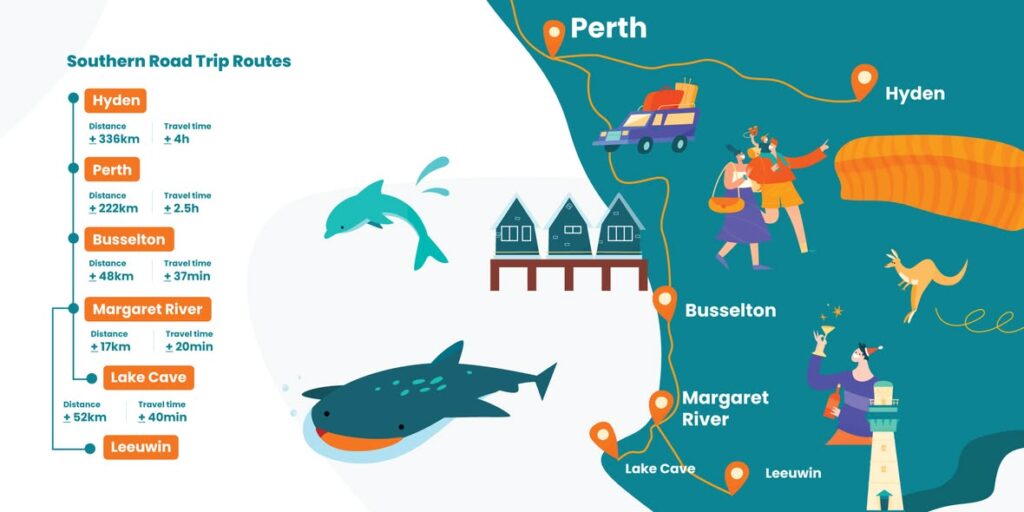
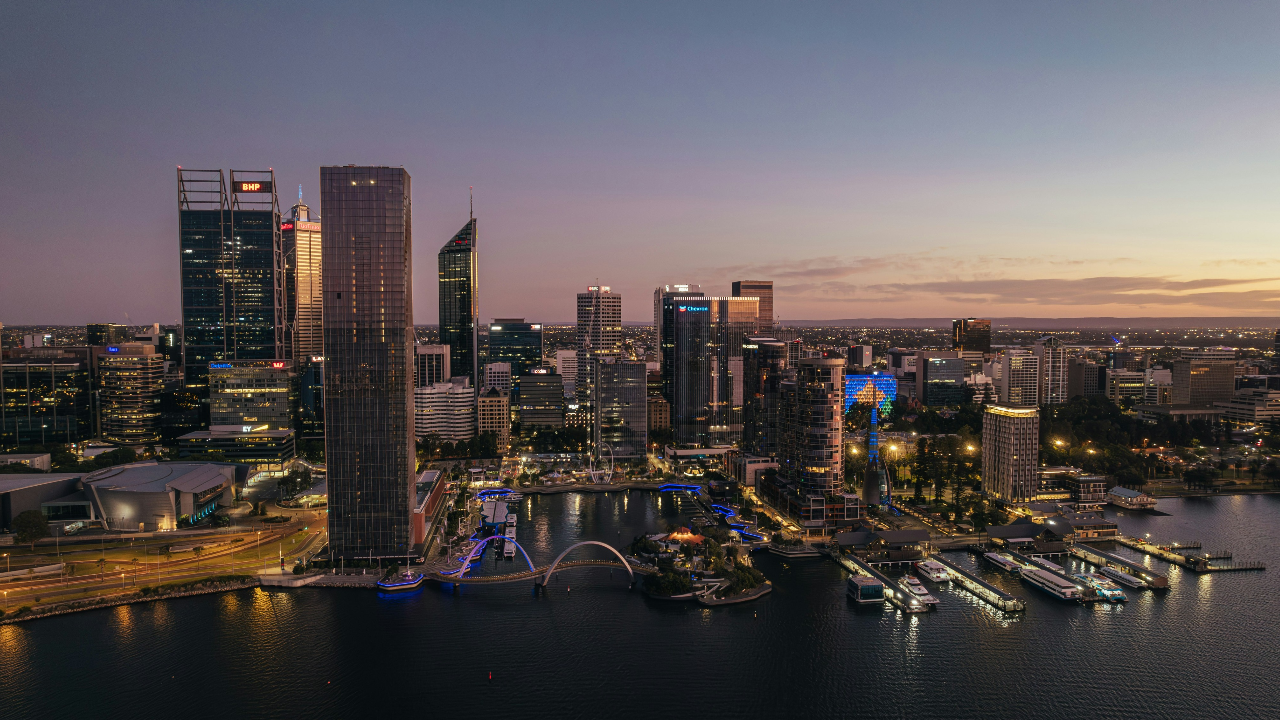
Every Western Australia itinerary begins in Perth — and rightly so. It’s polished, accessible, and a soft landing into a destination that can otherwise feel vast and unfamiliar. But the moment you leave Perth and begin the 2.5-hour drive south, something changes.
The landscape opens up. The pace slows down. And somewhere along that stretch, you realise that Western Australia isn’t going to be about ticking attractions — it’s going to be about experiencing space. That’s where Busselton comes in.
It’s the first destination on this route that feels like you’ve arrived somewhere meaningful — not just geographically, but experientially. For travel designers, this is critical. Busselton acts as the transition point between urban Australia and the region’s more immersive, nature-led experiences. It’s where itineraries stop being linear and start becoming layered.
Stay Smart: Location Is Everything
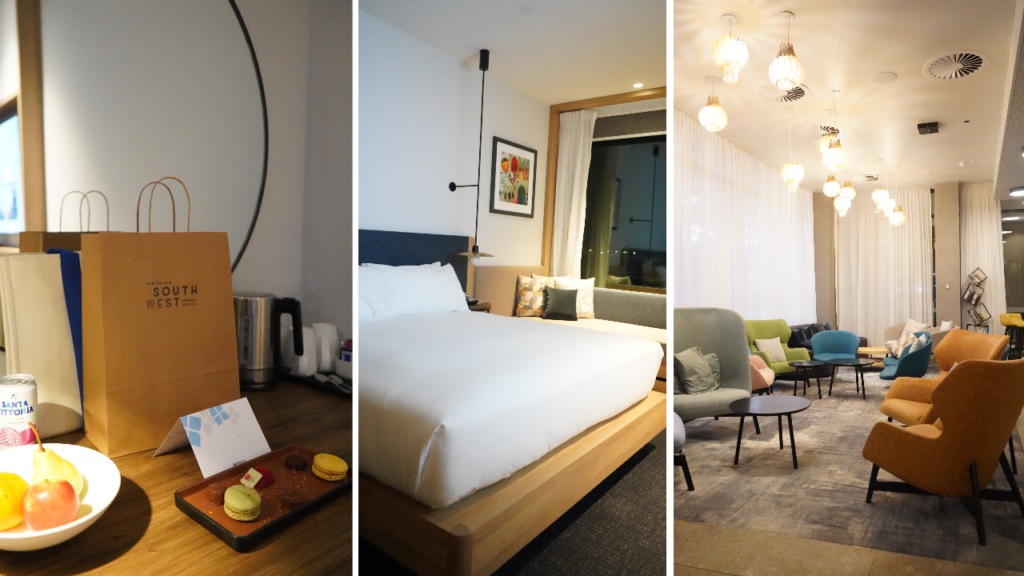
Let’s get tactical — because this is where good itineraries become great ones. Stay at Hilton Garden Inn Busselton. Why? Because it sits right by the jetty. And in Busselton, that changes everything. You’re not dealing with transfers, schedules, or “we’ll come back later.” You step out, and your key attraction is right there. Restaurants? Walkable. Brewery? Walkable. Evening stroll? Also walkable.
For Indian travellers especially, this kind of ease is underrated but deeply appreciated. And for travel designers, it means fewer moving parts and a much smoother guest experience.
Why Busselton Works So Well as a Base
Let’s talk strategy — because this is where Busselton really shines. As a base, it solves three of the biggest challenges travel designers face when building Western Australia itineraries:
1. Distance management
Western Australia is vast. Distances can intimidate first-time travellers. Busselton helps break the journey into digestible, comfortable segments.
2. Experience clustering
Within a short radius, you can offer coastal icons, marine experiences, soft adventure, wildlife encounters, and culinary options — all without exhausting your clients.
3. Pace control
Not every day needs to be high-energy. Busselton allows for a rhythm — active mornings, relaxed afternoons, immersive evenings.
In other words, it gives you flexibility without compromising on depth.
Start Strong: The Jetty Is Your Opening Scene
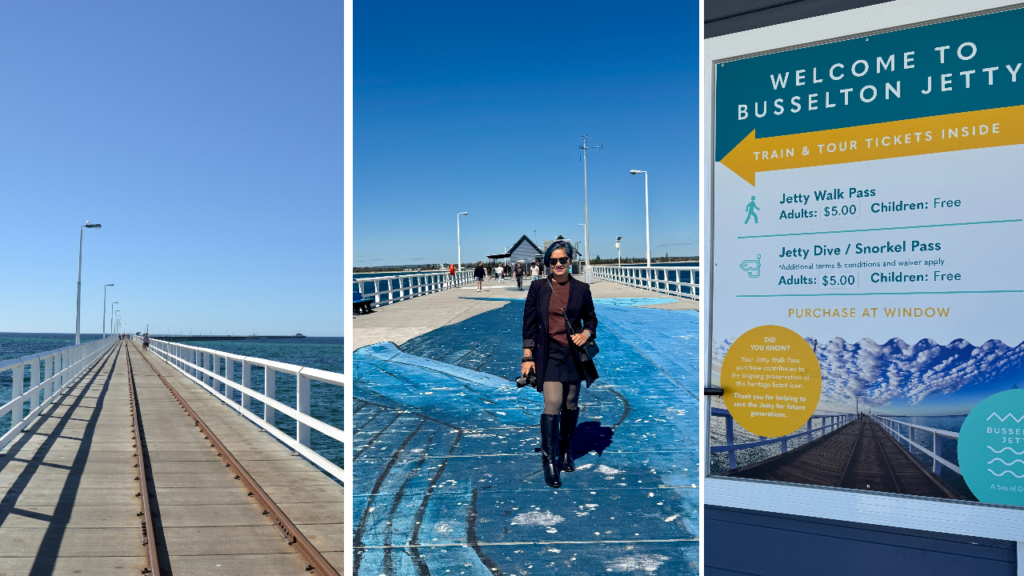
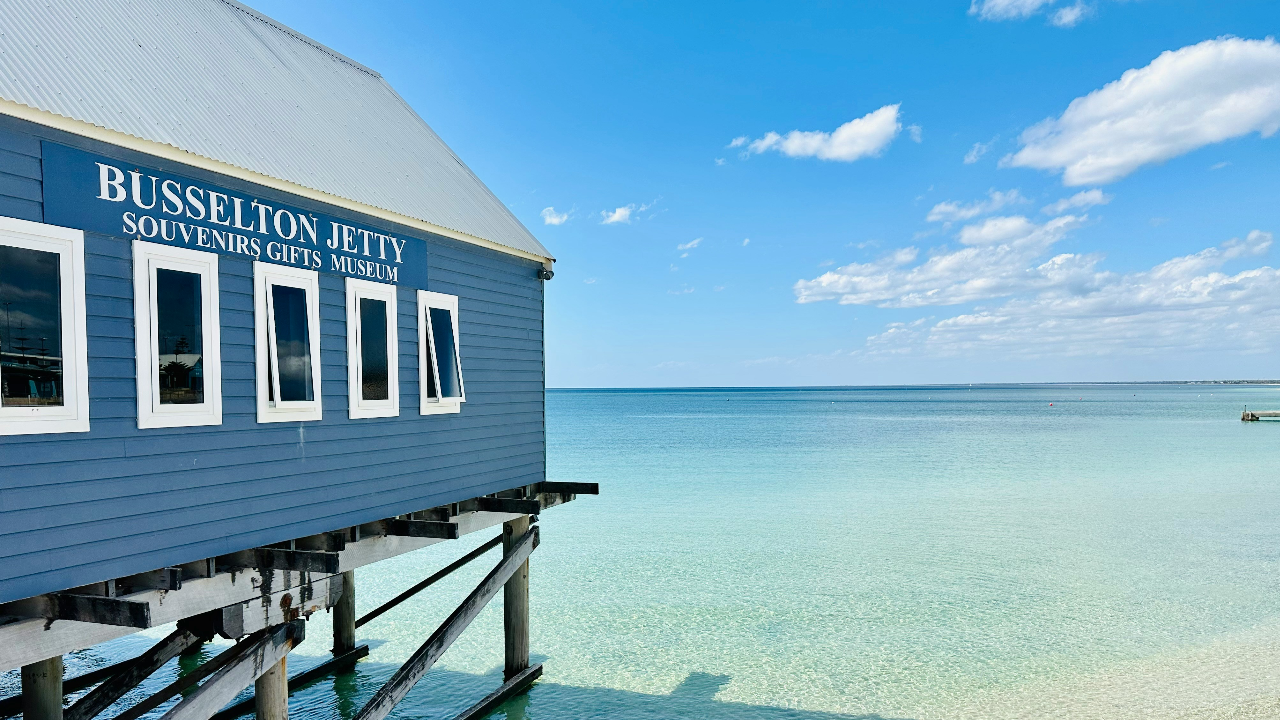
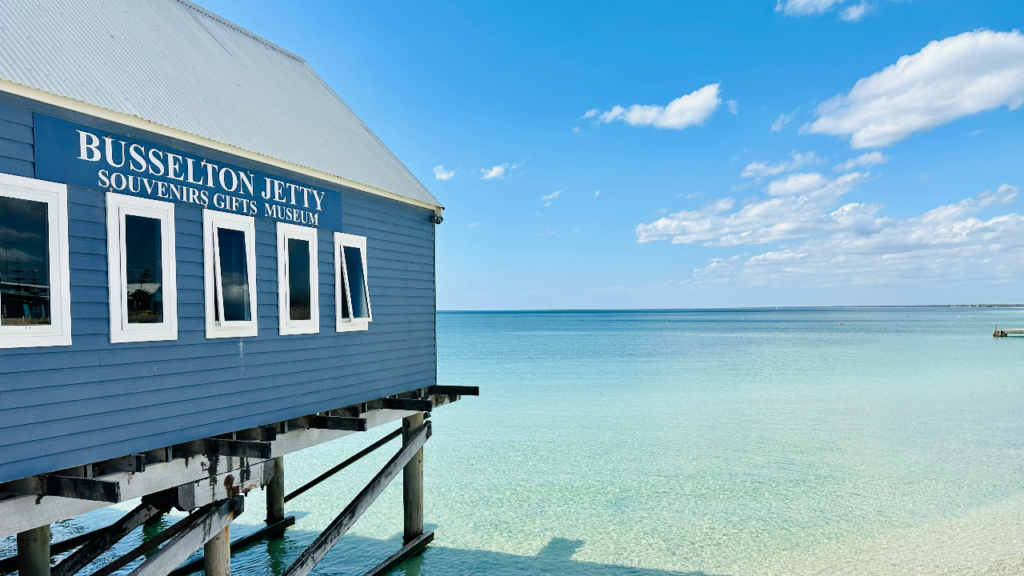
The first thing we did after checking in? No surprises — we headed straight to the Busselton Jetty. And here’s my first piece of advice: Do this in the morning.
We made the mistake of doing it later in the day, and while the experience was still fantastic, the Western Australian sun doesn’t play games. Morning light is softer, the crowds are lighter, and your clients will actually enjoy the walk instead of negotiating with the heat. Now, about the jetty itself.
At 1.8 kilometres, it’s the longest timber-piled jetty in the Southern Hemisphere — originally built in 1865 to facilitate trade and extended multiple times to accommodate larger ships. Today, it’s not just a structure. It’s an experience.
Yes, there’s a train. And yes, it’s adorable.
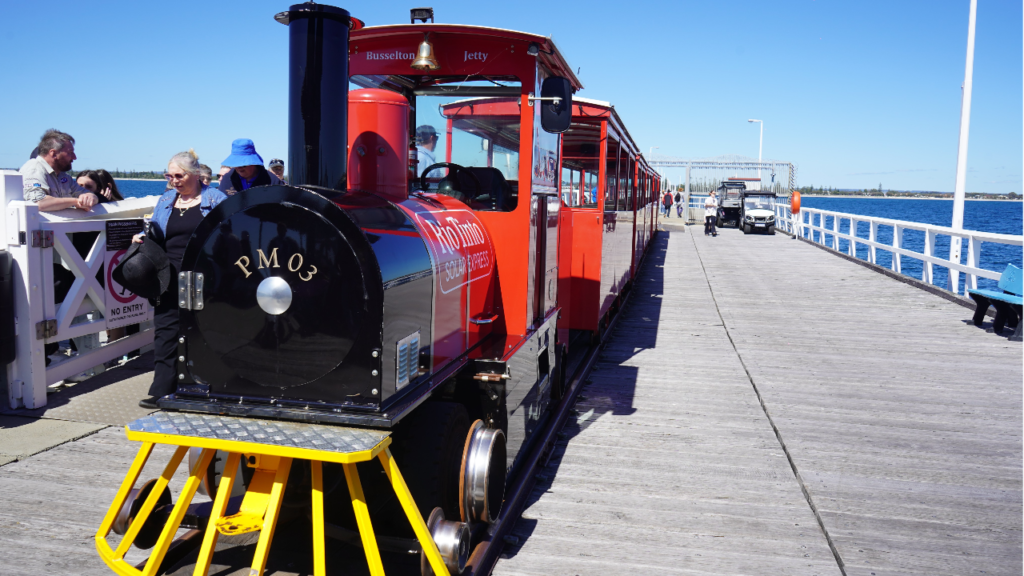
The jetty train — often referred to as the Jetty Train (Name is Rio Tinto Solar Express) — has been transporting visitors along the pier since the 1960s, evolving from a working rail line used for cargo into a leisurely ride for tourists. It’s charming, slow-paced, and perfect for families or clients who prefer minimal walking.
But if you can, walk it. It takes about 20–25 minutes one way, and that’s without stopping — which you absolutely will. The ocean stretches endlessly on both sides, the breeze keeps things comfortable (most of the time), and there’s something meditative about the rhythm of it.
This is not a “rush-through” attraction. It’s a “take your time, soak it in” moment.
The Underwater Observatory: A Hidden Differentiator
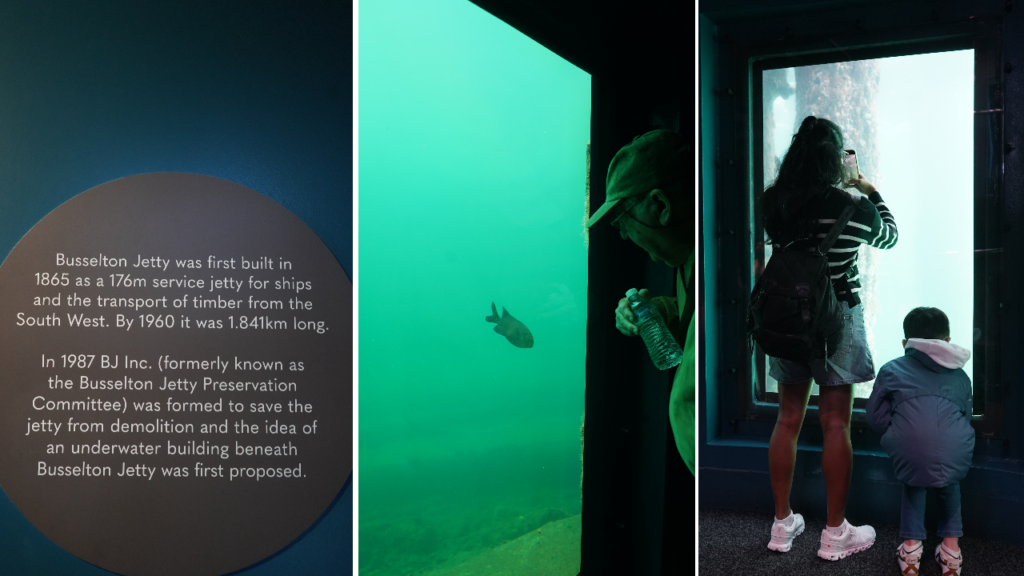
At the far end of the jetty lies one of Busselton’s most underrated highlights — the Busselton Jetty Underwater Observatory. And honestly, it’s a game-changer for travel designers. You descend eight metres below sea level into a natural aquarium, surrounded by coral formations and marine life that have grown organically around the jetty’s pylons. No diving. No snorkelling. No skill required.
Which means:
- Non-swimmers are included
- Older travellers are comfortable
- Families stay engaged
The entire jetty + observatory experience takes about 2.5 to 3 hours — making it a perfectly structured half-day activity. Pro tip? Walk to the end. Take the train back. It’s the best of both worlds.
Refuel Right: Beachside Lunch Done Right
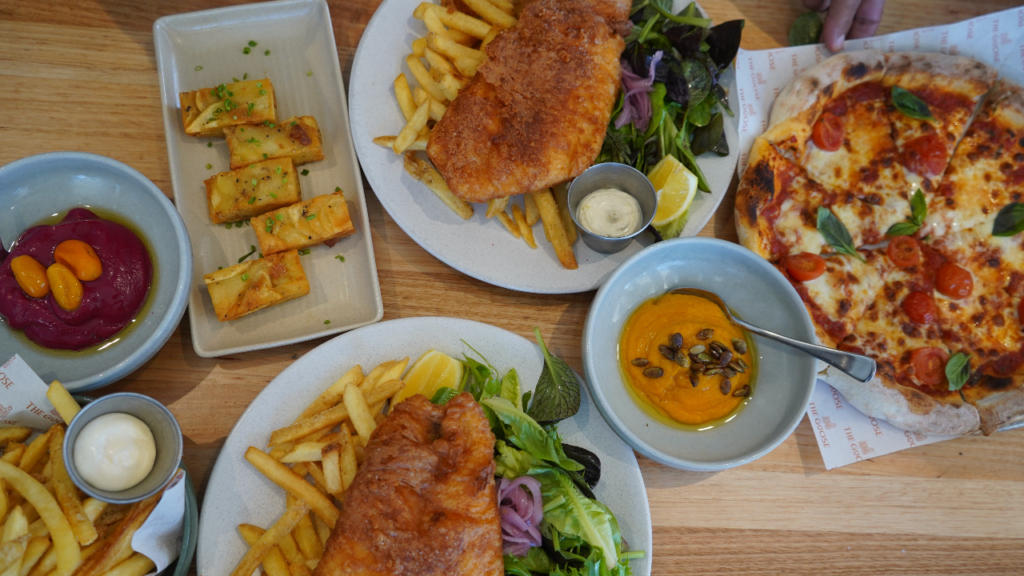
Once you’re back, don’t overcomplicate lunch.
Busselton’s beachfront eateries are exactly where your clients need to be. Think casual Australian dining, fresh produce, ocean views, and that easygoing vibe that Western Australia does so well. For travel designers, this is an effortless inclusion — no transfers, no logistics, just a natural continuation of the experience.
The Cape to Cape Track: Adventure, Simplified
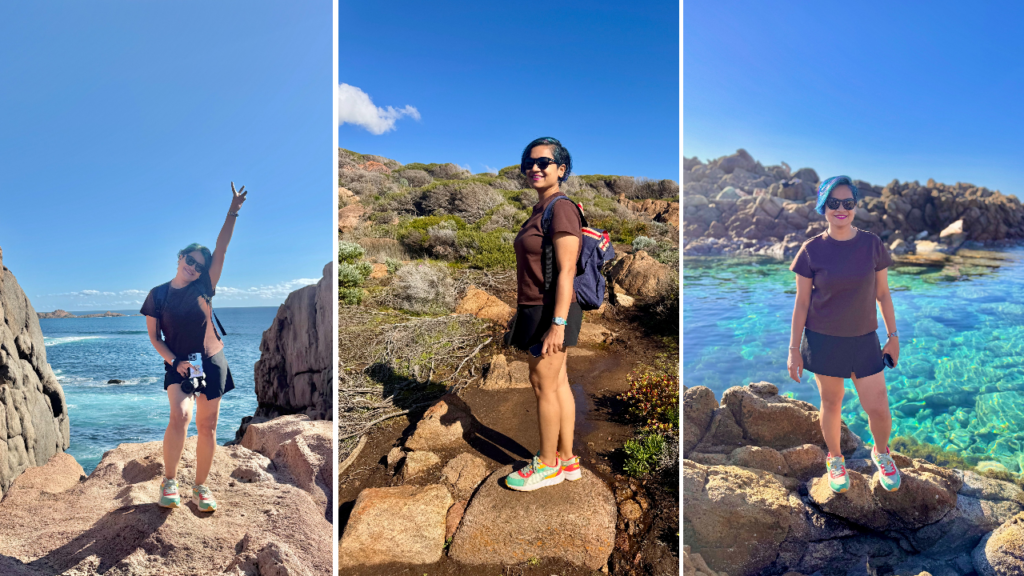
Western Australia has no shortage of dramatic landscapes, but the Cape to Cape Track is where nature truly takes centre stage.
Stretching 135 kilometres, it’s one of Australia’s most iconic coastal trails. But here’s the key insight for travel designers — your clients don’t need to commit to the full trek. Short, guided sections can be seamlessly integrated into a Busselton-based itinerary.
This allows you to offer:
- Cliffside views without multi-day fatigue
- Soft adventure for first-time hikers
- Highly photogenic moments that elevate the overall trip
In a market where “experiences” drive decision-making, this becomes a powerful inclusion.
Evenings That Actually Matter
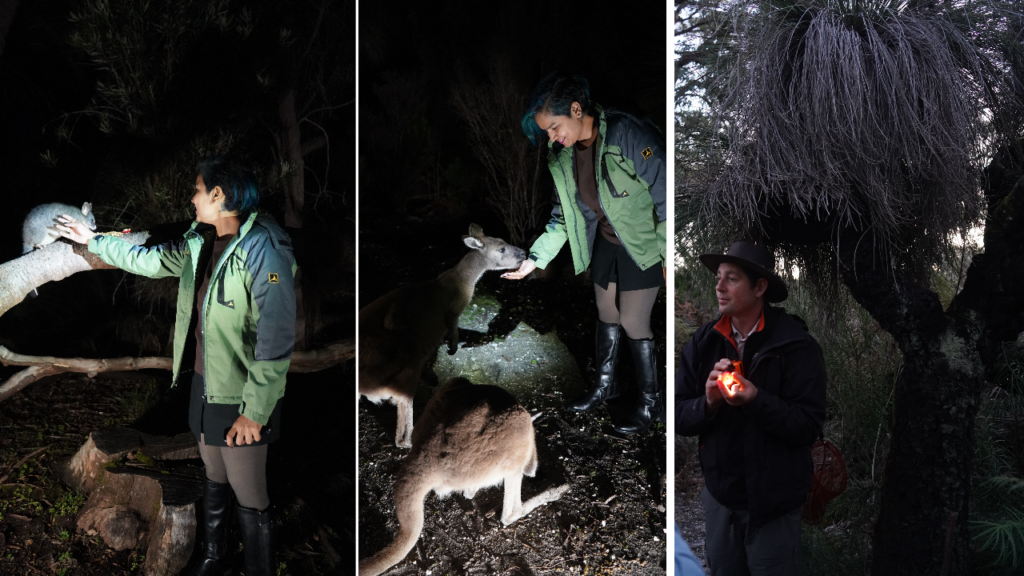
If there’s one element that elevates Busselton from “good” to “essential,” it’s what happens after sunset. This is where the destination surprises you. Through operators like South West Eco Discoveries, clients can step into a completely different world — one that is quieter, darker, and far more intimate.
The nocturnal bush walk is not just about spotting wildlife. It’s about immersion. You walk through conservation land as guides interpret the environment — from native plants to Indigenous knowledge systems. And then, suddenly, the moment happens.
Kangaroos emerge. Not in a zoo. Not behind barriers. But in the wild. Clients get to hand-feed them, observe their behaviour, and experience a connection that feels authentic rather than staged. Add to that the presence of other nocturnal species and a sky filled with stars — and you have an evening that consistently becomes the highlight of the trip. For travel designers, this is what we call a memory anchor — the experience clients talk about long after the journey ends.
Food, Breweries, and the Social Factor
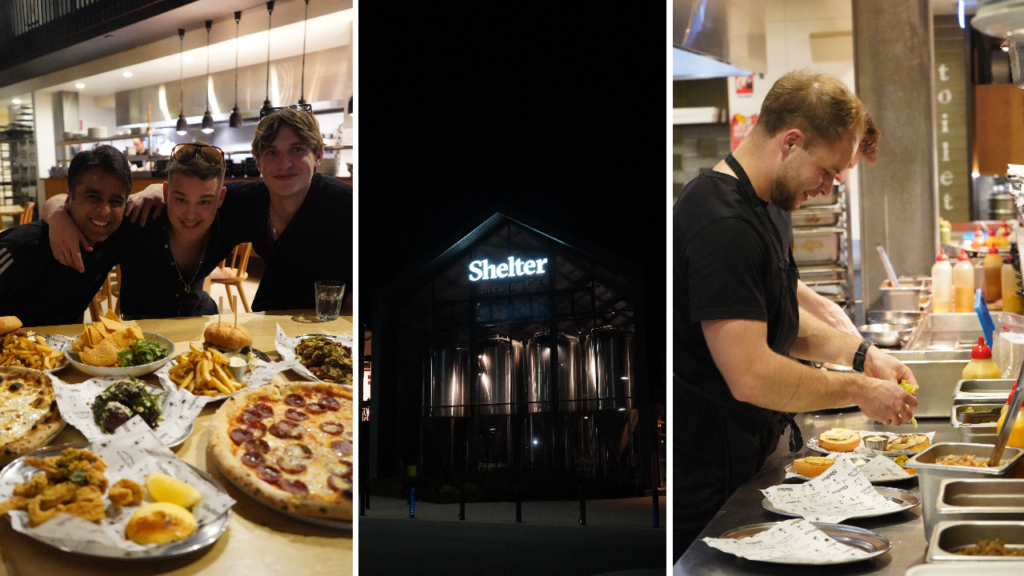
Busselton also understands something that many destinations overlook — the importance of unwinding. After a day of movement and exploration, clients want spaces where they can relax without effort. Local breweries and beachfront restaurants provide exactly that.
The best part? Many of them are within walking distance of key hotels. This creates a seamless transition from activity to leisure — no transfers, no waiting, no complexity. For younger travellers, couples, and even small groups, this adds a social dimension that enhances the overall itinerary.
How to Build a Busselton-Centric Itinerary
Here’s a simple structure that works consistently:
Day 1 (Arrival from Perth)
Check-in, jetty visit, underwater observatory, beachfront dinner.
Day 2
Morning at leisure or local exploration, afternoon Cape to Cape walk, evening wildlife experience.
Day 3
Day trips to Margaret River, wineries, or nearby attractions.
This format allows clients to experience variety while maintaining a comfortable pace.
The Real Takeaway for Travel Designers
Busselton doesn’t demand attention — it earns it. It’s not trying to compete with larger, more established destinations. Instead, it complements them, enhances them, and often outperforms them in terms of guest satisfaction.
If you position it correctly, Busselton becomes more than just a stop on the map. It becomes the part of the journey where everything comes together — nature, culture, ease, and experience. And in today’s travel landscape, where clients are looking for meaningful, memorable, and manageable itineraries, that combination is incredibly powerful.
If Western Australia is the dream, Busselton is where that dream starts to feel real. And as travel designers, that’s exactly what we’re here to create.